The Book That Wouldn’t Leave the Bestseller Lists
Here’s what I need you to understand about Miranda July’s All Fours: it has been absolutely everywhere since May 2024, and I mean everywhere. I’m talking the kind of sustained cultural presence that makes you feel slightly unhinged for not having read it sooner. The novel spent over fifty weeks on various bestseller lists throughout 2024 and into 2025, according to data that Publishers Weekly kept tracking like it was their job to document a literary moment in real time. Which, I suppose, it is. But the longevity of this book’s commercial success wasn’t the quiet kind. It was loud and argumentative and divisive in a way that made you want to know what everyone was actually angry or enchanted by.
I avoided it for months, if I’m being honest. I thought it might be one of those books that becomes a phenomenon because the internet decides it’s a phenomenon, you know? The kind of thing where the hype becomes bigger than the actual reading experience. I was wrong about that. Dead wrong. And now I’m the person texting you at midnight about it because I need someone who might understand why this book made me feel so many contradictory things at once.
What All Fours Actually Is (And Why I Can’t Stop Comparing It)
The novel follows a woman in her mid-forties experiencing perimenopause while on a strange romantic trip to a seaside house. That’s the plot. That’s also not the plot at all. What July has actually written is something that feels like it exists in multiple genres simultaneously, and I think that’s precisely why it caused so much argument. It has elements of domestic realism, psychological fiction, philosophical meditation, and something almost absurdist happening underneath everything. The constraints of each genre pull in different directions, and July appears to have done this completely intentionally.
I kept wanting to compare it to other books while reading. Sometimes it felt like Annie Ernaux doing sociological observation of the female body. Sometimes it felt like a Jenny Offill fragmented narrative, but with less restraint. Other times it reminded me of Didion’s essayistic mode, except embodied and unsettling. The thing is, those comparisons weren’t quite landing because July wasn’t working within any single tradition. She was writing something that the literary world didn’t quite have a container for, which explains why Miranda July’s All Fours on Goodreads shows nearly 850,000 ratings with an absurdly polarized distribution of five-star and one-star reviews. People either felt like they’d encountered something necessary or something entirely wrong.
The Perimenopause Novel That Broke Every Rule
Here’s where things get really interesting, and why this book mattered beyond just being a bestseller. The New York Times published three separate opinion pieces about All Fours between June 2024 and March 2025, all circling around the same central tension: what happens when you write about perimenopause in literary fiction with complete seriousness and zero sentimentality? It’s not a question that had been answered much in contemporary literature, and suddenly it became urgent.
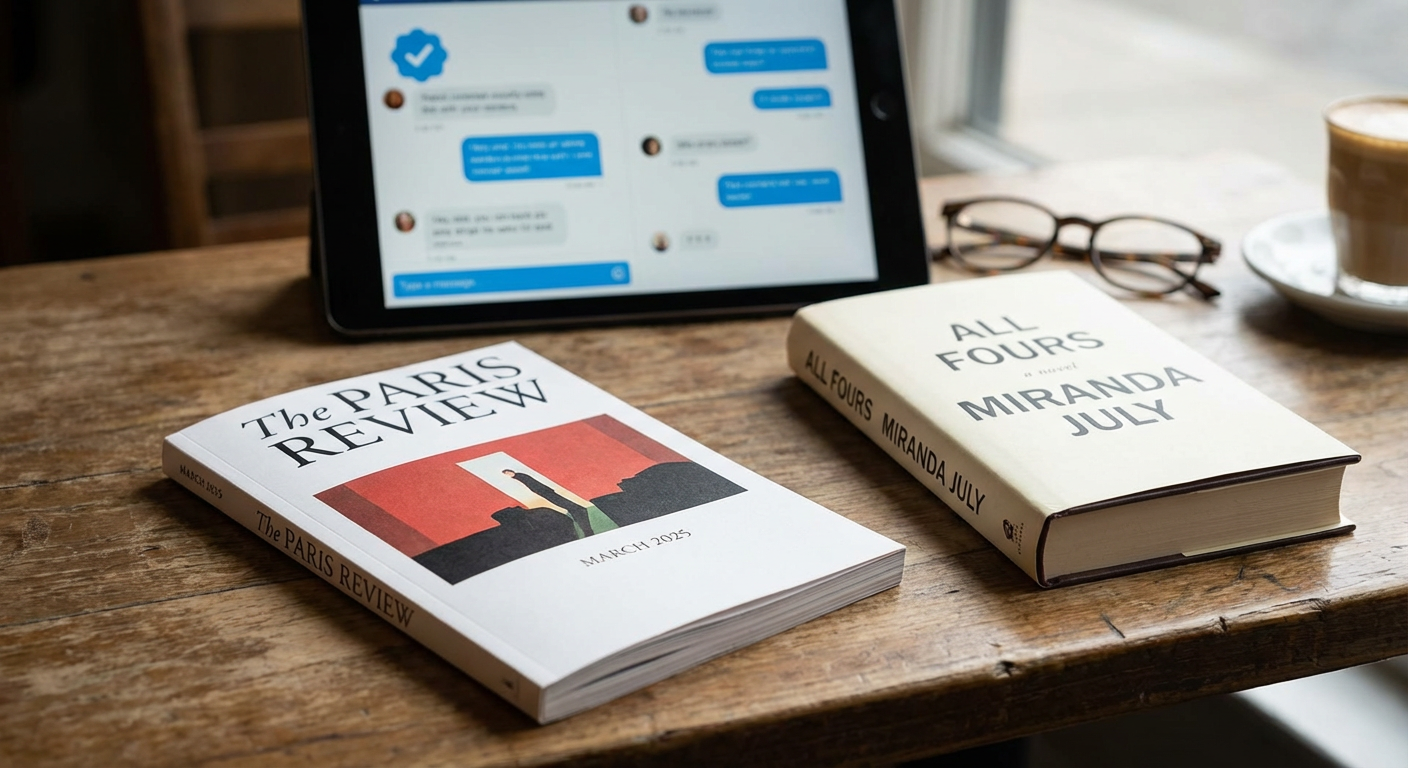
The novel won the PEN/Faulkner Award in 2025, and that’s genuinely significant. This was the first time that prize went to a novel with explicit perimenopause as a central thematic concern. It was also a finalist for the Women’s Prize for Fiction. But here’s the thing that actually got to me: July said something in an interview with The Paris Review where she explained she intentionally wrote the novel to not be likable in the way women’s fiction is expected to be likable. That quote went everywhere. It reignited every conversation about gendered expectations in publishing, about what we require from female protagonists, about whether women are allowed to be difficult and unreliable and self-interested.
Reading this after seeing that quote made everything sharper. July wasn’t interested in making you comfortable. The protagonist isn’t trying to be sympathetic. She’s not performing femininity or appeasing anyone, and that refusal is the entire engine of the book. It’s uncomfortable in ways that feel deliberate and important, even when you’re actively uncomfortable reading it.
The Genre Hierarchy Question That Won’t Disappear
I think what I want to process with you specifically is this: All Fours works because it refuses to stay in its lane. It’s literary fiction that has some of the propulsive weirdness of speculative work. It’s a domestic narrative that becomes almost philosophical. It’s explicitly about the female body in a way that feels both intimate and clinical. And maybe the reason it created such a fierce divide is because genre constraints exist partly to tell us what we’re allowed to care about in a particular book. Literary fiction about a woman in midlife should do certain kinds of emotional work. It should probably be about growth or wisdom or reconciliation. All Fours does none of that. It’s messier and stranger and more interested in what remains unresolved.
The book’s refusal to be neatly categorized also means it couldn’t be dismissed easily. You couldn’t say it was “just” a beach read or “just” a highbrow experiment. It was selling hundreds of thousands of copies and winning serious literary prizes at the same time. It was making people cry at two in the morning and also making them furious. That combination seems rare, and I think it’s because July understood something about how to use genre constraints not as limitations but as raw material. The expectations embedded in literary fiction, in domestic narrative, in women’s fiction became the actual subject matter.
Why This Still Matters and What I Need to Know
The reason I needed to write this out is because All Fours has me thinking about what happens when a book refuses to perform the genre it’s assigned. It’s made me reconsider how much of what we call “literary merit” is actually just a book’s willingness to follow certain unspoken rules. And it’s made me think about why a book about a woman in her forties experiencing perimenopause needed to become a cultural phenomenon before it could be taken seriously. The fact that it took massive bestseller status and multiple literary prizes to make that particular human experience worth writing and reading about says something uncomfortable about what we’ve valued.
I want to know what you thought if you’ve read it. I want to know if you’re in the five-star camp or the one-star camp or if you’re like me and genuinely unsure how to rate something that succeeded at making you feel genuinely unsettled. Tell me in the comments or come find me on Goodreads. I’m still processing this, and I have a feeling I will be for a while.
