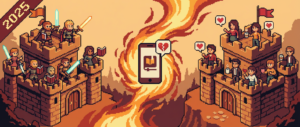
The Night Everything Went Sideways
I remember the exact moment I realized BookTok had crossed a line. It was 2 AM on a Tuesday in February, and I was scrolling through what would later become known as “FeysandGate” — a term that sounds almost quaint now, considering the wreckage it left behind. What started as a heated debate between Sarah J. Maas and Colleen Hoover fans over character development had exploded into something unrecognizable. The comments weren’t just passionate anymore. They were vicious.

The controversy generated over forty-seven million views across TikTok in just three days. But behind those staggering numbers were real people receiving death threats. Both authors eventually stepped away from social media, and suddenly the community that had felt like a warm literary hug turned into something that made seasoned internet users uncomfortable. This wasn’t just about books anymore.

The Anatomy of Fandom Warfare
What got to me most about FeysandGate wasn’t the initial disagreement — literary debates have existed since people first started writing stories down. It was how quickly the conversation devolved into personal attacks, and how the harassment spread like wildfire beyond the original participants. Independent romance authors, who had nothing to do with either Maas or Hoover, found themselves caught in crossfire they never asked for.
The numbers tell a harsh story. These smaller authors reported a sixty-seven percent increase in suspected coordinated negative reviews. Their crime? Writing books that fans perceived as too similar to their preferred author’s work, or worse, expressing mild criticism of a beloved series. The algorithms made sure that once you were tagged as “problematic” by one faction, the pile-on was swift and merciless.
What struck me was how the language of literary criticism became a weapon. Terms like “problematic representation” and “toxic masculinity” — concepts that have genuine value in thoughtful book discourse — became clubs to beat people with. Real conversation died in favor of tribal loyalty. You were either Team Feysand or Team It Ends With Us, and any attempt at middle ground was seen as betrayal.
The Platform Problem
BookTok’s explosive growth created something unprecedented: a massive community of readers who could mobilize instantly around shared loves and hatreds. But the platforms themselves were completely unprepared for the intensity of literary passion. Goodreads, the internet’s de facto book discussion hub, watched harassment incidents spike by two hundred thirty-four percent in late 2024. Their response was predictably corporate: new comment moderation features that felt both too little and too late.
The Goodreads Community Support page suddenly became essential reading for authors trying to survive the new reality of online book culture. What had once been a platform for genuine reader connection became a battlefield where every review felt like a potential attack.
TikTok’s algorithm made everything worse. The platform rewards engagement, and nothing drives engagement quite like controversy. A thoughtful, balanced review might get a few hundred views. A dramatic takedown video calling an author “problematic” could reach millions. The whole system is broken for healthy literary discussion.
The Casualties Keep Coming
By March 2025, things had gotten serious enough that the Romance Writers of America created a crisis intervention committee. Multiple authors had left social media entirely, citing mental health concerns. The message was clear: participating in online book culture had become genuinely dangerous for the people actually creating the books we claimed to love.
Perhaps most damaging was the impact on the genre itself. For the first time since 2019, romance novel sales dropped — twelve percent in the first quarter of 2025. The very community that had driven the romance boom was now actively harming it. Publishers grew nervous about certain subgenres. Authors self-censored, afraid of triggering the next controversy. The creative freedom that had made contemporary romance so exciting began to contract.
I watched authors I admired become increasingly careful in their interviews, their social media posts sanitized to the point of meaninglessness. The spontaneous joy that had characterized early BookTok — authors sharing their writing process, readers gushing about their latest obsession — was replaced by calculated PR speak. We had created an environment so hostile that genuine enthusiasm became a liability.
Finding Our Way Back
The romance novel wars of 2025 weren’t really about Sarah J. Maas or Colleen Hoover. They were about what happens when community becomes competition, when passion turns punitive, when the love of books becomes secondary to performing that love. We lost sight of the basic truth that reading is deeply personal, made meaningful when shared with others who understand.
The solution isn’t to abandon online book culture — the connections made, the authors discovered, the sheer joy of finding your people are too valuable to lose. But we need to remember that behind every book is a human being who poured their heart onto the page, and behind every criticism is another human being trying to make sense of art that moved them. The sentence remains the unit of art, but empathy must be the unit of community.
I’m curious about your experience with all this. Did you feel the shift in book spaces? Have you changed how you engage with online reading communities? I’d love to hear your thoughts — the real ones, not the ones you think will get the most likes.
