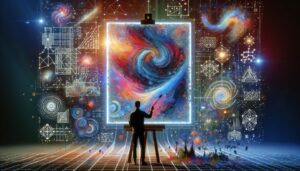
Hey tech enthusiasts! Gather ’round because today we’re diving into a fascinating (and slightly mind-bending) corner of the tech world: AI in creative arts. Yup, that’s right—machines are putting on berets, splashing paint, and writing sonnets. And while it might sound like the setup for a sci-fi novel, it’s happening right here, right now. So grab your digital paintbrush, and let’s explore this growing field!
The Birth of AI Creatives
Once upon a time, the thought of machines making art seemed as crazy as teleportation. But here we are, and we’ve got AI models like DALL-E, Stable Diffusion, and Midjourney creating images that wouldn’t look out of place in a MoMA exhibit. Neural networks have basically stumbled into an art revolution that nobody saw coming.
The Rise of AI-Driven Visual Arts
Let’s start with visuals because, honestly, they’re the easiest to gawk at. AI-generated art is breaking traditional boundaries. Take DALL-E (named after our beloved Salvador Dalí and Pixar’s WALL-E). These algorithms take text prompts and spit out visuals that are downright dreamlike. Want an image of an armchair in the shape of an avocado? DALL-E’s got you covered.
Behind the magic is a complex process involving Generative Adversarial Networks (GANs) and deep learning techniques. In simple terms, it’s like having two AI models in a constant creative duel, pushing each other to improve until one paints a masterpiece.
But AI art doesn’t just stop at painting. Researchers and developers are moving into animation, with AI tools generating entire short films and animations. The emotional and aesthetic depth that was once only human territory? Yeah, machines are getting there too.
Can AI Compose a Symphony?
If you think you can spot the difference between a Beethoven symphony and what an AI composes, think again. In recent years, AI systems like OpenAI’s MuseNet are not only composing music but doing so with an understanding of style and melody that’s honestly a bit unsettling. These systems analyze countless pieces from various composers and genres to generate original music that can be both beautiful and utterly mind-blowing.
From Notes to Symphony
How does music-making AI work, you ask? Well, it’s like teaching a machine to ‘listen’ and ‘learn’ from playlists. These neural networks analyze the structure, tempo, and key changes across thousands of musical pieces to predict the next probable note or chord. The technology is so good now that AI can mimic styles from Baroque to pop with scary accuracy.
What I find really interesting is how these AI composers are pushing human musicians to think outside the box and collaborate in new ways. It’s become this weird duet of machine precision and human emotion, creating something completely different.
The Literary Ambitions of AI
Ah, the written word—a domain we thought was safe from robotic interference. But AI has made incredible progress in writing. GPT-3, developed by OpenAI, is one of the most powerful AI models in this field. It can generate essays, stories, and even poetry with a human-like quality that’s frankly a little eerie.
Words Worth a Thousand Insights
So, how is it possible for AI to be this creative with words? Mostly, it’s about massive amounts of data. GPT-3 is trained on an enormous collection of text from books, websites, and articles, learning not just grammar and syntax but deeper themes and storytelling patterns.
The possibilities are huge. It could help writers overcome blocks, inspire new styles, or generate content faster than any human could manage. But it also raises some tough questions about authorship and originality—conversations as complex as the AI’s prose itself.
The Future Canvas of AI Creativity
Where do we go from here? The creative potential of AI feels both limitless and mysterious. As the technology gets better, here are some paths worth thinking about:
Collaborative Creativity
As AI tools get more sophisticated, they might evolve from solo creators to real creative partners. Picture working with a machine that gets your style, your preferences, your quirks, sparking new ideas in this back-and-forth loop of human-AI creativity.
Ethical Dilemmas and Opportunities
Of course, AI in the arts brings its share of headaches. Who owns an AI-generated masterpiece? How do we weigh the contributions between coder and creator? While intellectual property laws try to catch up with these questions, we need to make sure innovation stays grounded in responsibility and fairness.
Democratizing Creativity
On the bright side, AI could make creativity accessible to everyone. Anyone with a computer might be able to generate amazing art or write moving compositions, potentially bridging the gap between those who can afford art education and those who can’t.
Parting Thoughts
There you have it, folks! The explosion of AI in the arts is more than a tech trend—it’s changing how we think about creativity and collaboration. Whether you’re a digital artist, an emerging songwriter, or just someone who loves tech, this is a pretty amazing time to watch AI become part of the creative process.
As we move forward, I think we should embrace this era of AI artistry with both excitement and healthy skepticism. After all, the next Picasso might just be lines of code. Who knew the future would be this colorful, musically rich, and full of unexpected prose? What a time to be alive!
Let me know what wild AI-driven creations have caught your eye recently—or better yet, what you’ve created yourself. Until next time, keep those creative circuits buzzing!
Feel free to hit the comment section below. Art might be about expression, but tech is all about conversation.
